
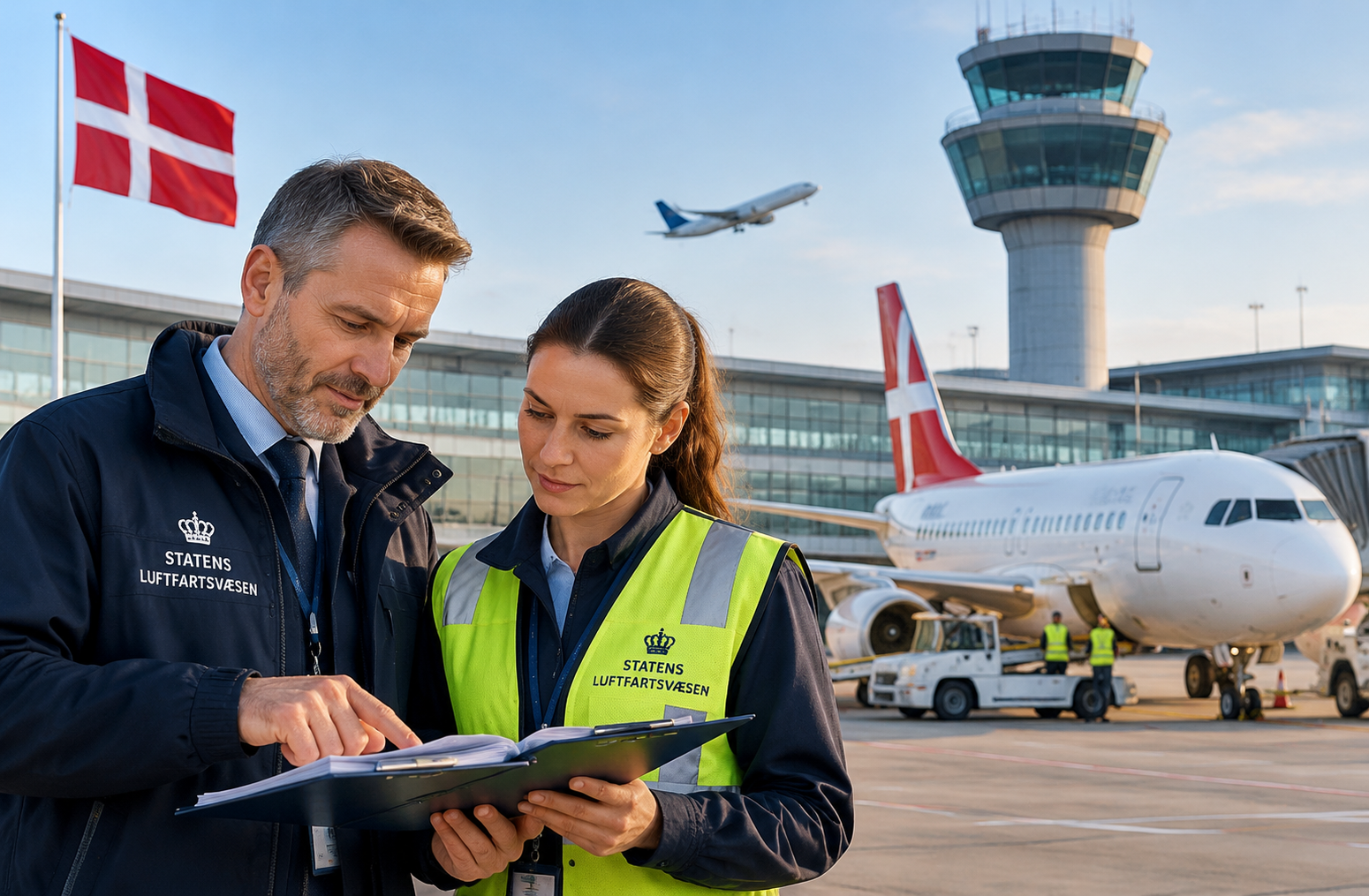
Statens Luftfartsvæsen was Denmark’s national civil aviation authority responsible for regulating and supervising aviation activities across the country. The organization played an important role in maintaining aviation safety, controlling aircraft operations, monitoring airlines, and ensuring that Danish aviation followed national and international standards.
The Danish term Statens Luftfartsvæsen can be translated as “The State Aviation Authority” or “Danish Civil Aviation Administration.” The organization worked under the Danish Ministry of Transport and served as the main government body responsible for civil aviation matters.
Although Statens Luftfartsvæsen no longer exists as an independent authority today, its responsibilities continue through the Danish Transport Authority (Trafikstyrelsen), which took over its functions after a major administrative merger in 2010.
For people researching Danish aviation history, government agencies, or aviation regulation, Statens Luftfartsvæsen represents an important chapter in how Denmark developed one of the safest aviation systems in Europe.
Meaning and Background of Statens Luftfartsvæsen
The name Statens Luftfartsvæsen comes from three Danish words:
- Statens means state or government-owned
- Luftfart means aviation or air transport
- Væsen refers to an institution, authority, or administrative body
Together, the name describes a government organization responsible for managing aviation affairs.
Like aviation authorities in other countries, Statens Luftfartsvæsen existed to create rules, supervise aviation companies, approve aviation activities, and protect passengers and aviation workers.
Internationally, its role was similar to organizations such as:
- Federal Aviation Administration (FAA) in the United States
- Civil Aviation Authority (CAA) in the United Kingdom
- European Union Aviation Safety Agency (EASA) in Europe
The main difference was that SLV operated specifically for Denmark and focused on national aviation regulation.
History of Statens Luftfartsvæsen
The history of Statens Luftfartsvæsen is connected with the development of aviation in Denmark. As aircraft technology advanced during the 20th century, the Danish government needed a dedicated organization to manage aviation safety and legal requirements.
Before the creation of the modern authority, Denmark used several different aviation organizations to handle aviation administration.
Early aviation regulation focused mainly on:
- Aircraft registration
- Flight permissions
- Pilot qualifications
- Safety requirements
- Airport development
As commercial aviation expanded, Denmark required a stronger regulatory system capable of managing airlines, airports, and modern aircraft operations.
Development of Danish Aviation Regulation
During the early years of aviation, government oversight was limited because air travel was still developing. However, increasing passenger flights and commercial aviation activities created a need for professional supervision.
Over time, Denmark established specialized aviation institutions that gradually evolved into Statens Luftfartsvæsen.
The authority became responsible for creating a structured aviation environment where airlines, airports, pilots, and aviation companies could operate under clear safety standards.
The Role of Statens Luftfartsvæsen Before 2010
During its active years, Statens Luftfartsvæsen handled many responsibilities related to Danish civil aviation.
Its main purpose was not operating airlines but ensuring that aviation organizations followed safety regulations.
The authority worked as a regulator and supervisor rather than a commercial aviation company.
Main Responsibilities of Statens Luftfartsvæsen
Aviation Safety Regulation
One of the most important responsibilities of Statens Luftfartsvæsen was maintaining aviation safety.
The authority developed and enforced rules covering different areas of aviation, including:
- Aircraft operation
- Airline activities
- Maintenance procedures
- Pilot requirements
- Airport safety
- Flight operations
Aviation safety depends on strict procedures because even small mistakes can create serious risks. SLV helped ensure that aviation companies followed established safety standards.
Aircraft Certification and Supervision
Statens Luftfartsvæsen was involved in monitoring aircraft-related activities.
This included ensuring that aircraft operating in Denmark met required safety conditions.
The authority worked with:
- Aircraft operators
- Maintenance organizations
- Aviation engineers
- Technical specialists
Regular checks and approvals helped maintain aircraft reliability and passenger safety.
Airline Oversight
Airlines operating in Denmark needed to meet regulatory requirements established by aviation authorities.
Statens Luftfartsvæsen supervised airline operations by reviewing:
- Operational procedures
- Safety management systems
- Training standards
- Compliance with aviation rules
This helped create a safer environment for both domestic and international air travel.
Pilot Licensing and Aviation Personnel
Another important function was managing requirements related to aviation professionals.
The authority supported systems for:
- Pilot licensing
- Flight training organizations
- Aviation personnel qualifications
Pilots and aviation workers must meet strict requirements before performing safety-critical tasks.
Airport Regulation and Safety
Airports require extensive safety management systems, and SLV played a role in supervising airport operations.
The authority monitored areas such as:
- Runway safety
- Airport procedures
- Emergency planning
- Technical requirements
This ensured Danish airports operated according to aviation safety expectations.
Air Navigation Services
Statens Luftfartsvæsen also had responsibilities connected with air navigation and flight safety services.
This included areas such as:
- Air traffic management
- Communication systems
- Navigation procedures
- Aviation infrastructure
Safe air travel depends on coordination between aircraft, pilots, airports, and air traffic services.
Aviation Regulations and Standards
A major part of SLV’s work involved creating and maintaining aviation regulations.
These rules covered different parts of civil aviation, including:
- Commercial flights
- Private aviation
- Aircraft maintenance
- Aviation training
- Airport operations
Many regulations were designed to align Denmark with international aviation standards.
Why Was Statens Luftfartsvæsen Important?
Statens Luftfartsvæsen played a significant role in developing Denmark’s aviation sector.
Without aviation authorities, airlines and airports would not have consistent safety requirements.
The organization helped provide several important benefits.
Improving Aviation Safety
The primary benefit of SLV was improving aviation safety through regulation and inspection.
By monitoring aviation companies and enforcing safety requirements, the authority helped reduce risks in air transportation.
Building Passenger Confidence
Passengers expect airlines and airports to follow strict safety procedures.
Government aviation authorities help create public confidence by ensuring that aviation operations are properly controlled.
Supporting Aviation Growth
A strong regulatory system allows aviation industries to grow safely.
SLV helped create conditions where airlines, airports, and aviation businesses could operate professionally.
International Aviation Cooperation
Aviation is an international industry. Aircraft regularly travel between different countries, meaning aviation authorities must cooperate globally.
Statens Luftfartsvæsen worked within international aviation frameworks connected to organizations such as:
- International Civil Aviation Organization (ICAO)
- European aviation institutions
- European Union aviation regulations
Challenges Faced by Statens Luftfartsvæsen
Like other aviation authorities, SLV faced several challenges.
Rapid Changes in Aviation Technology
Aircraft technology changes constantly.
Aviation authorities must continuously update rules related to:
- Modern aircraft systems
- Digital technology
- Safety procedures
- New aviation methods
Balancing Safety and Industry Growth
Authorities must maintain strict safety standards while allowing aviation companies to develop.
Too many restrictions can slow industry growth, while weak regulation can create safety risks.
International Regulation Requirements
Because aviation crosses borders, Danish aviation rules needed to match international standards.
This required cooperation with European and global aviation organizations.
What Replaced Statens Luftfartsvæsen?
Statens Luftfartsvæsen ceased to exist as an independent authority in 2010.
Its responsibilities were transferred to Trafikstyrelsen, also known as the Danish Transport Authority.
The merger was part of a Danish government effort to combine transport-related administration into a more unified structure.
Today, Trafikstyrelsen manages many responsibilities previously handled by SLV, including aviation oversight and transport regulation.
Statens Luftfartsvæsen and Trafikstyrelsen Difference
Statens Luftfartsvæsen focused mainly on civil aviation.
Trafikstyrelsen has broader responsibilities covering multiple transport sectors, including:
- Aviation
- Railway transport
- Maritime areas
- Transport safety regulation
The aviation expertise developed under SLV continues through Trafikstyrelsen’s aviation division.
Frequently Asked Questions
Is Statens Luftfartsvæsen still operating?
No. Statens Luftfartsvæsen was merged into Trafikstyrelsen in 2010 and no longer exists as a separate organization.
What was the purpose of Statens Luftfartsvæsen?
Its purpose was to regulate Danish civil aviation, improve safety, supervise aviation organizations, and ensure compliance with aviation standards.
What does Statens Luftfartsvæsen mean in English?
It means the Danish State Aviation Authority or Civil Aviation Administration of Denmark.
Who replaced Statens Luftfartsvæsen?
The Danish Transport Authority, known as Trafikstyrelsen, replaced SLV and took over its responsibilities.
Was Statens Luftfartsvæsen similar to the FAA?
Yes. Its role was similar to the FAA because both organizations were responsible for regulating civil aviation safety and operations.
Conclusion
Statens Luftfartsvæsen was a central part of Denmark’s aviation history. For decades, the authority helped regulate civil aviation, supervise airlines and airports, manage aviation standards, and improve flight safety.
Although the organization was closed in 2010, its work continues through Trafikstyrelsen and modern European aviation systems.
Understanding Statens Luftfartsvæsen provides insight into how Denmark developed a safe and reliable aviation industry and how government regulation supports the everyday operation of air travel.